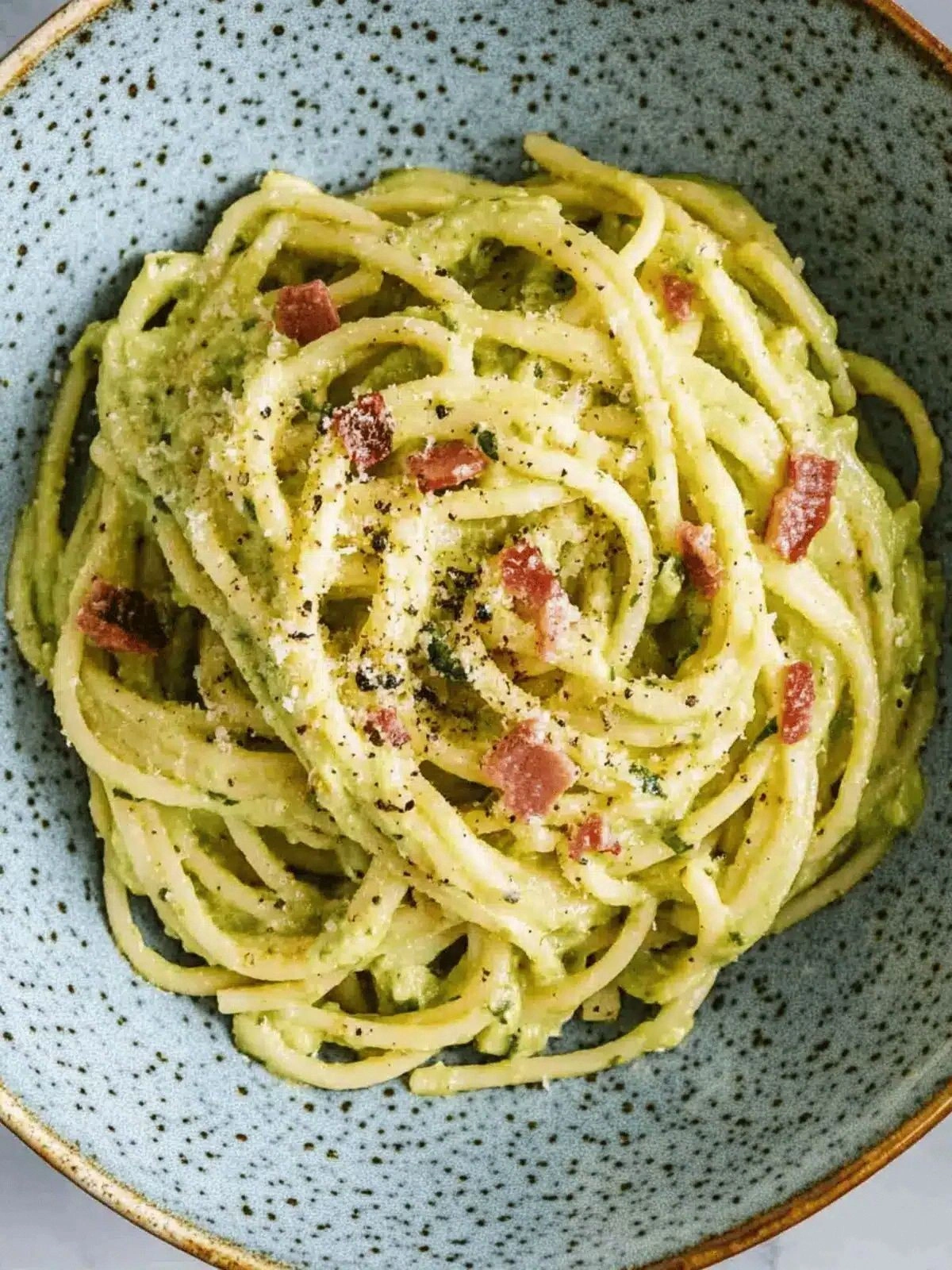
It started on a rainy Thursday night when I was staring at a half‑baked pot of linguini and a stack of stale bacon. I thought, “Why not throw everything I have in the fridge together and see what happens?” The result was a silky, creamy sauce that clung to every strand like velvet, and the bacon popped with a crunch that could make any skeptic swoon. I dare you to taste this and not go back for seconds; the first bite is a revelation of fresh, buttery avocado mingling with smoky bacon, brightened by a splash of lemon and a whisper of paprika.
I’ve spent years chasing the perfect carbonara, but this version is hands down the best you’ll ever make at home. It’s a marriage of classic Italian technique and a modern, health‑conscious twist that turns a comfort dish into a vibrant, nutrient‑dense meal. Picture yourself pulling this out of the pot, the whole kitchen smelling incredible, and the steam swirling like a cloud of buttery green. The sauce is so smooth it practically melts into the pasta, while the bacon provides a satisfying pop that shatters like thin ice. The bright, citrusy note of lemon cuts through the richness, leaving your palate refreshed and begging for more.
If you’ve ever struggled with carbonara’s timing—getting the eggs from runny to silky without scrambling them—this recipe is a rescue. I’ll be honest — I ate half the batch before anyone else got to try it, and the kitchen was a glorious mess of avocado pulp and bacon grease. The secret? A gentle heat, a splash of pasta water, and a steady hand. The result is a sauce that coats the noodles like a fine silk scarf, and the bacon is crisp enough to give that satisfying crunch without turning the dish into a greasy mess.
Okay, ready for the game‑changer? Let me walk you through every single step — by the end, you’ll wonder how you ever made it any other way. This recipe doesn’t just feed your hunger; it feeds your soul, turning ordinary ingredients into a culinary celebration. Let’s dive in.
What Makes This Version Stand Out
- Taste: The creamy avocado base delivers a buttery, nutty flavor that replaces the traditional pancetta with a lighter, greener profile. The lemon juice adds a zesty brightness that lifts the richness, while paprika gives a subtle smoky undertone. The final result is a harmonious balance of savory, tangy, and sweet notes.
- Texture: The sauce’s silkiness is achieved by emulsifying avocado with egg yolks and pasta water, producing a coating that clings to every noodle strand. Crisp bacon edges provide a contrasting crunch that shatters like thin ice. The kale adds a pleasant bite without overpowering the dish.
- Simplicity: With only 12 ingredients and a single pan, you can have a gourmet meal on the table in under 45 minutes. No separate sauce pot, no separate bacon pan—everything happens in one pot.
- Uniqueness: Avocado replaces the traditional cream or butter, giving a fresh, green twist that’s unexpected but delicious. The combination of avocado, bacon, and kale is a flavor mash‑up that few recipes attempt.
- Ingredient Quality: Each component shines: ripe avocados, fresh basil, high‑quality bacon, and a generous grating of Parmesan. The quality of each ingredient is the backbone of the dish’s success.
- Make‑ahead Potential: The dish can be prepared ahead of time and reheated with a splash of pasta water to restore its silky texture. The bacon can be cooked separately and added later, preserving crispness.
Inside the Ingredient List
The Flavor Base
Avocados are the heart of this sauce, offering a creamy texture and a subtle nutty flavor that replaces dairy. Ripe avocados (two whole) should be split, pitted, and scooped into a blender with a splash of lemon juice to prevent oxidation and add brightness. If you’re short on avocados, you can substitute half a cup of Greek yogurt for a tangier twist, but the silky texture will be slightly altered.
Lemon juice (two tablespoons) cuts through the richness of the avocado and bacon, providing a citrus lift that keeps the dish from feeling heavy. Freshly squeezed lemon is best; bottled juice can introduce a bitter aftertaste. The acidity also helps emulsify the sauce, creating a velvety coating on the pasta.
Garlic (two cloves) adds depth and warmth. Mince the garlic finely to release its oils without producing a harsh bite. If you’re sensitive to raw garlic, lightly sauté it with the olive oil before adding the avocado to mellow its flavor.
Extra virgin olive oil (two tablespoons) brings a fruity, peppery note that balances the creamy base. Use a high‑quality oil for the best flavor; the olive oil’s finish will linger on the palate after each bite.
The Protein & Texture Crew
Egg yolks (three large) provide richness and help bind the sauce, creating a silky coating that clings to the noodles. Use fresh, high‑grade eggs for the best emulsification. If you prefer a lighter version, replace one yolk with an egg white, but the sauce will be less thick.
Bacon (four slices) adds smoky flavor and crunch. Choose thick‑cut bacon for a balanced texture; thin bacon can become too greasy. Cook the bacon until it’s just crisp, then reserve the rendered fat for the sauce.
Parmesan cheese (one cup, freshly grated) delivers umami and a salty finish. Grated Parmesan melts more easily than pre‑grated, ensuring a smoother sauce. For a sharper bite, add a few extra shavings of aged Parmesan.
Kale (one cup, chopped) brings a green, slightly bitter note that contrasts the creaminess of the sauce. Wilt the kale briefly in the pan to soften it before adding the sauce; this prevents it from becoming too fibrous.
The Pasta & Liquid Dynamics
Linguini noodles (12 oz) offer a slender, flat shape that holds sauce well. Use a generous amount of salted boiling water (one cup reserved) to help the sauce emulsify during the final step. The pasta’s al dente bite provides a pleasant chew that balances the creamy coating.
Pasta water (one cup) is essential for adjusting the sauce’s consistency. The starchy water helps the sauce cling to the noodles, creating a silky texture. Add the water gradually, tasting as you go, to reach the desired thickness.
The Final Flourish
Kosher salt (one teaspoon) seasons the dish, enhancing all flavors. Taste the sauce before adding additional salt; the Parmesan already provides a savory note.
Paprika (one teaspoon) introduces a subtle smokiness that complements the bacon. Use smoked paprika for a deeper flavor profile, or regular paprika for a milder touch.
Cayenne (one pinch) adds a gentle heat that brightens the dish. Adjust the amount to your heat tolerance; a pinch is enough to give a subtle kick without overpowering.
Everything's prepped? Good. Let's get into the real action.
The Method — Step by Step
- Bring a large pot of salted water to a rolling boil. Drop in the linguini and cook until just al dente, about 8-9 minutes. Reserve one cup of the pasta water before draining. The timing is critical: under‑cooked pasta will not hold the sauce, over‑cooked pasta will disintegrate.
- While the pasta cooks, slice the bacon into thin strips and lay them on a paper‑lined tray. Place the tray in a preheated oven at 400°F (200°C) for 10-12 minutes, or until the edges are crisp and the bacon is rendered. This oven method keeps the bacon clean and the kitchen less greasy.
- In a blender or food processor, combine the avocado, lemon juice, garlic, olive oil, and a splash of the reserved pasta water. Blend until the mixture is completely smooth and creamy. If the sauce feels too thick, add a tablespoon more pasta water until it reaches a pourable consistency.
- Heat a large skillet over medium heat and add the bacon fat that has been rendered. Once the fat is hot, add the cooked linguini and toss to coat. The pasta should sizzle softly, giving a subtle toasty aroma that signals readiness.
- Remove the skillet from the heat and pour the avocado sauce over the noodles. Quickly stir in the egg yolks, whisking vigorously to prevent the eggs from scrambling. The residual heat from the pasta will gently cook the eggs into a silky emulsion.
- Add the reserved pasta water a tablespoon at a time, stirring after each addition, until the sauce reaches a luscious, coat‑the‑noodle consistency. The water’s starches help bind the sauce to the noodles, creating a silky finish.
- Toss in the chopped kale, allowing it to wilt slightly in the hot sauce. The kale’s bitterness will mellow, complementing the creamy base. Stir until the kale is just tender, about 1-2 minutes.
- Crush the crisp bacon into bite‑sized pieces and fold them into the pasta. Sprinkle the grated Parmesan, paprika, cayenne, and kosher salt, then stir until evenly distributed. The final dish should have a vibrant green hue, a hint of smoky crunch, and a subtle heat.
- Serve immediately, garnished with extra Parmesan shavings and a drizzle of olive oil if desired. The sauce should cling to every noodle, and the bacon should crackle with each bite. This is the moment of truth—your taste buds will thank you.
That's it — you did it. But hold on, I've got a few more tricks that'll take this to another level. Keep reading for insider tips, creative twists, and storage secrets.
Insider Tricks for Flawless Results
The Temperature Rule Nobody Follows
Keep the skillet at medium heat when adding the bacon fat and noodles. A high heat can scorch the sauce, while too low a heat will leave the noodles under‑seasoned. A steady medium heat ensures the pasta stays warm enough to emulsify the eggs without cooking them too quickly.
Why Your Nose Knows Best
The aroma of sizzling bacon and fresh avocado is the first indicator that your sauce is on track. A faint, nutty scent from the avocado and a smoky, buttery aroma from the bacon should mingle. If you detect a sharp, metallic scent, the eggs may be overcooked.
The 5-Minute Rest That Changes Everything
Once the sauce is assembled, let the pasta rest for 30 seconds before serving. This brief pause allows the flavors to meld and the sauce to thicken slightly, resulting in a more cohesive bite. The rest also lets the residual heat finish cooking the eggs gently.
Use a Silicone Spatula for the Perfect Coat
A silicone spatula slides under the noodles without breaking them, ensuring an even coating of sauce. It also helps prevent the sauce from sticking to the pan, making cleanup a breeze. The flexibility of silicone means you can stir quickly and smoothly.
Keep the Pasta Water Handy
The starchy pasta water is your secret weapon for adjusting the sauce’s thickness. Keep a small ladle ready; adding water gradually gives you full control over the final consistency. Remember, too much water will thin the sauce, while too little will make it cling too tightly.
Creative Twists and Variations
Spicy Chipotle Kick
Swap the paprika for smoked chipotle powder and add a dash of hot sauce. The smoky heat pairs beautifully with the creamy avocado, creating a dish that feels both comforting and adventurous. This variation is perfect for those who love a bold flavor profile.
Sun-Dried Tomato Burst
Add chopped sun‑dried tomatoes to the pasta for a sweet, tangy burst. The tomatoes provide a chewy texture that contrasts with the silky sauce. This version works well for a Mediterranean‑inspired dinner.
Protein-Packed Power Bowl
Replace linguini with quinoa or cauliflower rice for a low‑carb, high‑protein version. The texture of quinoa adds a nutty crunch, while cauliflower rice keeps the dish light. This variation is ideal for a post‑workout meal.
Vegan Avocado Carbonara
Omit the bacon and eggs, and replace the Parmesan with nutritional yeast. Use a splash of soy sauce for umami and a pinch of smoked paprika for depth. This plant‑based version remains creamy and flavorful while staying cruelty‑free.
Seafood Sensation
Add sautéed shrimp or scallops for a luxurious twist. The sweet, buttery seafood complements the avocado’s richness, while the lemon juice brightens the entire dish. Serve with a side of crusty bread to soak up the sauce.
Herb Garden Delight
Incorporate fresh basil, parsley, and thyme into the sauce for an herbaceous lift. The herbs bring a fresh, green note that balances the creamy base. This variation is perfect for spring or summer evenings.
Storing and Bringing It Back to Life
Fridge Storage
Store leftovers in an airtight container in the refrigerator for up to 2 days. The sauce may thicken slightly, so add a splash of pasta water or a drizzle of olive oil before reheating to restore its silky texture.
Freezer Friendly
Freezing the dish is not recommended because the avocado may separate. However, you can freeze the cooked pasta and sauce separately. Reheat each component gently on the stove and combine them with a splash of pasta water.
Best Reheating Method
Reheat the pasta and sauce on low heat, stirring frequently and adding a tiny splash of water or broth to loosen the sauce. The goal is to warm the dish without overcooking the eggs, preserving the creamy consistency.