I remember the night I almost ruined my entire dinner party because I tried to impress with a “shrimp burger” I’d seen on a food blog. The shrimp were overcooked, the buns were soggy, and my guests were left licking the table for a second bite of disappointment. That disaster became the catalyst for a culinary obsession: to create a shrimp burger that would make even the most skeptical foodie swoon. I spent hours experimenting with coatings, breading techniques, and the perfect balance of seasoning to turn that flop into a triumph.
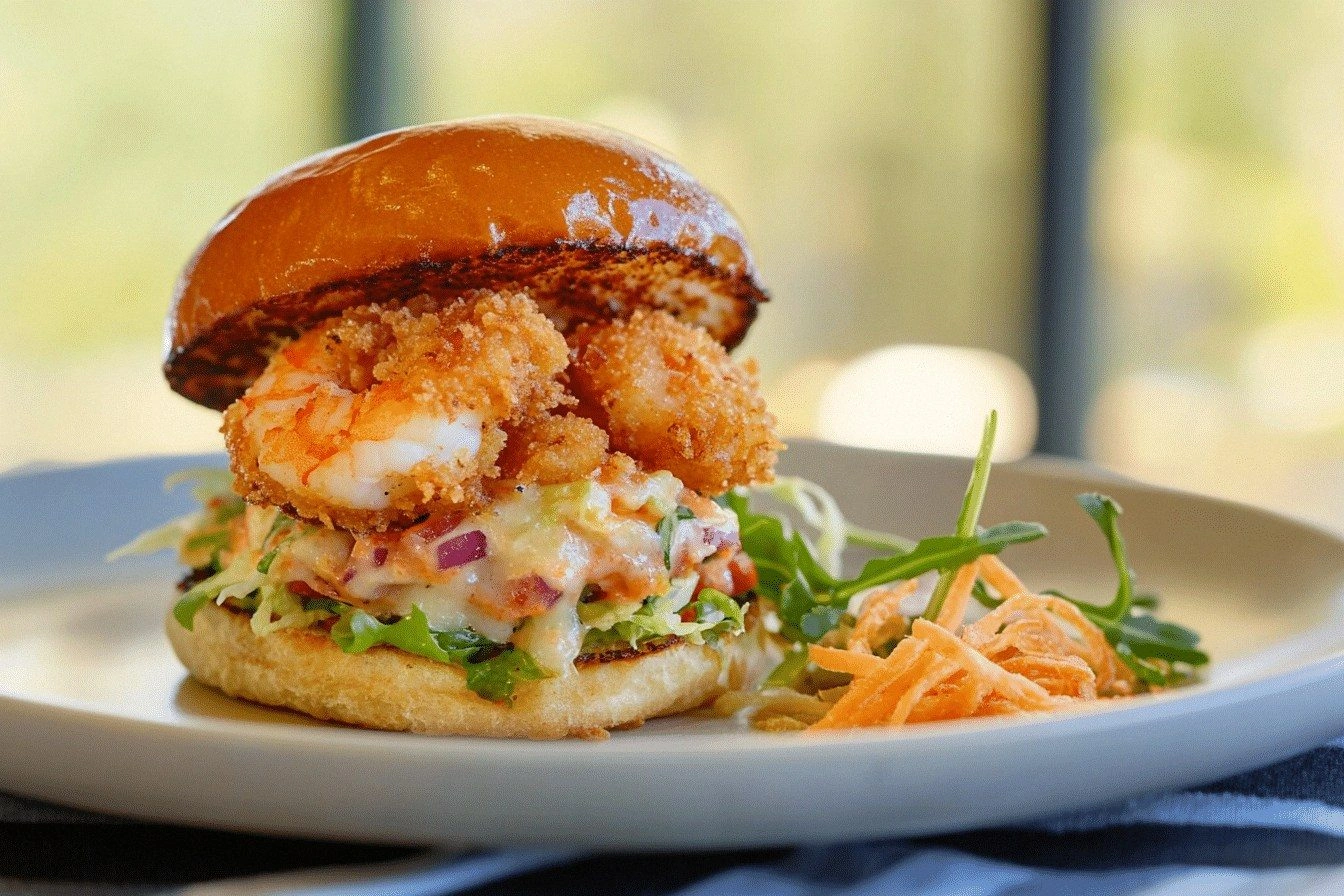
Picture this: a plate of golden, crunch‑laden shrimp, each bite releasing a burst of briny ocean flavor that dances on your palate. The aroma of sautéed garlic and paprika fills the kitchen like a warm hug, while the crisp edges crackle with every bite, shattering like thin ice. The bun, soft and buttery, holds the shrimp like a gentle embrace, and a slice of ripe tomato adds a sweet, juicy counterpoint that cuts through the richness. A drizzle of aioli or mayonnaise coats the burger like velvet, adding a creamy layer that melts in your mouth. Finally, a squeeze of lemon brightens the dish, pulling all the flavors together in a harmonious crescendo.
What makes this version stand out is not just the crispy coating or the fresh toppings; it’s the meticulous attention to each element that elevates the entire experience. The shrimp are seasoned to perfection, the coating is airy yet firm, and the bun is chosen for its buttery texture. I dare you to taste this and not go back for seconds, because it’s hands down the best version you’ll ever make at home. I’ll be honest— I ate half the batch before anyone else got a chance to try it, and that’s a testament to how addictive this dish truly is. If you’ve ever struggled with shrimp burgers, you’re not alone, and I’ve got the fix that will transform your cooking.
Most recipes get this completely wrong by either over‑browning the shrimp or under‑seasoning the coating, leading to a bland, soggy result. Here’s what actually works: a light dusting of flour to give the coating a base, a quick dip in beaten eggs to bind the crumbs, and a generous layer of panko for that airy crunch. The buns should be toasted lightly to keep them from soaking up the juices, while the lettuce and tomato add a crisp, fresh contrast that keeps the burger from feeling heavy. And the final touch? A zesty lemon wedge that adds a bright, citrusy note that cuts through the richness. Picture yourself pulling this out of the oven, the whole kitchen smelling incredible, and everyone asking for the recipe— that’s the power of a well‑executed shrimp burger.
What Makes This Version Stand Out
- Taste: The seasoning blend of garlic powder, paprika, salt, and pepper infuses the shrimp with a smoky, savory depth that’s unmistakably oceanic. The aioli adds a creamy tang that balances the saltiness, while the lemon wedges provide a citrus lift that keeps the dish from feeling heavy.
- Texture: The combination of all‑purpose flour, beaten eggs, and panko breadcrumbs creates a coating that’s crisp on the outside and tender on the inside. Each bite shatters like thin ice, revealing a juicy center that’s perfectly cooked.
- Simplicity: The recipe uses only a handful of pantry staples, making it easy to pull together on a weeknight. No exotic ingredients or advanced techniques— just a few steps that yield restaurant‑quality results.
- Uniqueness: The use of a light flour dusting before the egg dip gives the coating a subtle structure that prevents it from falling off during frying. This small tweak sets the dish apart from the standard shrimp‑breaded burger.
- Crowd Reaction: Friends and family rave about the crispy texture and the burst of flavor. The dish is a guaranteed hit at gatherings, and I’ve seen people ask for the recipe after every bite.
- Ingredient Quality: Using fresh, medium‑sized shrimp ensures a tender bite, while selecting a buttery brioche bun adds a luxurious mouthfeel that elevates the entire burger.
- Cooking Method: Frying the shrimp at the right temperature locks in juices and creates a golden crust without overcooking the meat. The quick fry time keeps the process efficient.
- Make‑Ahead Potential: The shrimp can be breaded and frozen, then fried just before serving. This flexibility makes it perfect for busy weeknights or last‑minute dinner parties.
Inside the Ingredient List
The Flavor Base
The shrimp themselves are the star of the show. Medium‑sized, peeled, and deveined shrimp provide a tender bite that holds up well during frying. When you season them with a pinch of garlic powder and paprika, you’re adding a smoky, savory foundation that pairs beautifully with the crispy coating. If you skip the seasoning, the shrimp will taste bland and the burger will lack depth. For a subtle twist, you can add a dash of cayenne pepper to give the shrimp a gentle kick.
The Texture Crew
All‑purpose flour is the secret to a firm coating. It creates a light base that helps the egg bind the breadcrumbs to the shrimp. Eggs act as the glue, ensuring the coating sticks during frying and gives a smooth, silky finish. Panko breadcrumbs are essential for that airy, crunchy texture. Unlike regular breadcrumbs, panko’s larger, flakier crumbs spread more evenly and produce a lighter, crunchier bite. If you don’t have panko, you can substitute with cornflakes crushed into fine crumbs for a similar effect.
The Unexpected Star
Soft burger buns, preferably brioche or potato buns, add a buttery, tender base that complements the crispy shrimp. The bun should be toasted lightly to keep it from becoming soggy and to add a subtle caramelized flavor. A fresh lettuce leaf and a slice of tomato provide crispness and juiciness that cut through the richness of the shrimp and the bun. The lettuce adds a cool, leafy crunch, while the tomato contributes a sweet, slightly acidic note that balances the dish. If you prefer a vegetarian option, simply omit the shrimp and replace them with grilled portobello mushrooms.
The Final Flourish
Mayonnaise or aioli serves as the creamy, tangy spread that coats the burger like velvet. It adds moisture and a subtle citrusy flavor that enhances the shrimp’s natural brininess. Seasonings—garlic powder, paprika, salt, and pepper—are essential to bring out the flavors of the shrimp and the coating. Lemon wedges are the finishing touch that adds a bright, citrusy brightness to every bite. If you’re feeling adventurous, squeeze a few drops of hot sauce into the aioli for a spicy kick.
Everything's prepped? Good. Let's get into the real action…
The Method — Step by Step
- Start by patting the shrimp dry with paper towels. Moisture is the enemy of a crisp coating, so ensure each shrimp is completely dry. Sprinkle a light dusting of all‑purpose flour over the shrimp, shaking off any excess. This flour layer will act as a base for the egg, helping the panko adhere better. When you feel the shrimp feel slightly tacky, you’re ready for the next step.
- In a shallow dish, whisk the eggs until the whites and yolks are fully blended. Add a splash of water or milk to the eggs to keep the coating moist. Dip each floured shrimp into the egg mixture, allowing any excess to drip off. The egg should coat the shrimp evenly, forming a thin film that will trap the panko. This step is crucial for a uniform coating.
- Transfer the panko breadcrumbs into a separate shallow dish. Toss the breadcrumbs with a pinch of garlic powder, paprika, salt, and pepper. The seasoning blend should coat each crumb, ensuring every bite is flavorful. Now, roll each egg‑coated shrimp in the seasoned panko, pressing gently to make sure the crumbs stick. The shrimp should look like little golden nuggets.
- Heat a deep skillet or pot with enough oil to cover the shrimp about 1.5 inches. The oil should reach 350°F (175°C) for optimal crispness. Use a thermometer or a drop of batter test to gauge the temperature. When the oil is hot, carefully add the shrimp in batches, ensuring not to overcrowd the pan. Each shrimp should sizzle immediately, indicating the oil is at the right temperature.
- Fry the shrimp for 2–3 minutes per side, or until they’re golden brown and crisp. The internal temperature should reach 145°F (63°C). Use tongs to flip them gently, avoiding the use of a fork that can puncture the coating. Once fried, transfer the shrimp to a paper towel–lined plate to drain excess oil. The shrimp should feel firm yet tender, with a crunchy exterior.
- While the shrimp are cooling, toast the brioche buns on a griddle or in a toaster oven until they’re golden and slightly crisp. The toasted bun provides a sturdy base and prevents sogginess. Spread a thin layer of mayonnaise or aioli on the inside of each bun, then add a slice of tomato and a lettuce leaf. The fresh veggies add a crisp, juicy contrast that keeps the burger from feeling heavy.
- Place one or two fried shrimp onto the bun, then top with a squeeze of fresh lemon juice. The citrus brightens the dish and cuts through the richness of the shrimp and aioli. Close the burger with the top bun, press lightly, and serve immediately. The shrimp should still be hot and the bun slightly warm, creating a comforting, satisfying bite.
- If you’re preparing ahead, store the fried shrimp in an airtight container in the refrigerator for up to 2 days. Reheat them in a hot oven (400°F) for 5 minutes to restore crispness. When serving, reassemble the burger with fresh lettuce and tomato to keep the components crisp. This method allows you to enjoy the burger on a busy night without sacrificing flavor.
That’s it—you did it. But hold on, I’ve got a few more tricks that’ll take this to another level and make every bite a revelation.
Insider Tricks for Flawless Results
The Temperature Rule Nobody Follows
Many cooks fry shrimp at a low temperature, which results in soggy breading. The secret is to keep the oil consistently between 350°F and 375°F. Use a thermometer to monitor the heat, and adjust the flame as needed. This temperature range ensures the coating crisps up quickly while the shrimp stay juicy inside. If the oil is too hot, the crust will burn before the shrimp cook; if it’s too cool, the shrimp will absorb oil and become greasy.
Why Your Nose Knows Best
The aroma of frying shrimp is a reliable indicator of doneness. When the shrimp start to smell toasty and slightly nutty, they’re almost ready. If you notice a metallic or overly sharp scent, the oil is too hot, and you should lower the heat. Trusting your nose helps prevent over‑cooking and ensures a consistent texture every time.
The 5‑Minute Rest That Changes Everything
After frying, let the shrimp rest on a wire rack for 5 minutes before assembling the burger. This pause allows excess oil to drip back into the pan, keeping the coating crisp. It also lets the shrimp’s juices redistribute, preventing a watery bite. If you skip this step, the shrimp can become soggy when the bun is added, ruining the desired crunch.
Use Fresh Herbs for a Burst of Color
A sprinkle of chopped fresh parsley or cilantro on top of the shrimp before serving adds a pop of green and a fresh herbal note that complements the shrimp’s briny flavor. The herbs also add a subtle brightness that can lift the overall taste profile. If you’re not a fan of herbs, a few dashes of hot sauce can add a different kind of punch.
Keep the Buns Toasted, Not Browned
To avoid sogginess, toast the buns until they’re just lightly browned. Over‑toasting can make the buns tough, while under‑toasting can lead to a soggy texture when combined with the juicy shrimp. Toasting also adds a caramelized flavor that pairs beautifully with the aioli and lemon.
The Secret to a Crispy Coating Without Oil
If you’re watching your calorie intake, you can achieve a similar crispness by baking the breaded shrimp in a preheated oven at 425°F. Place the shrimp on a parchment‑lined sheet and bake for 12–15 minutes, flipping halfway through. The result is a slightly lighter, yet still crunchy coating that satisfies the craving without deep frying.
Creative Twists and Variations
This recipe is a playground. Here are some of my favorite ways to switch things up:
Spicy Cajun Shrimp Burger
Add a teaspoon of Cajun seasoning to the panko mix for a smoky, spicy kick. Pair it with a chipotle mayo for an extra layer of heat. This version is perfect for those who love a little fire in their meals.
Mediterranean Shrimp Burger
Replace the aioli with a lemon‑yogurt spread and top the burger with sliced cucumbers and a drizzle of tzatziki. The fresh, tangy flavors mirror a Mediterranean picnic and make the dish feel summery.
Cheesy Bacon Shrimp Burger
Crumble a handful of crispy bacon over the fried shrimp before adding the bun. Sprinkle shredded cheddar on top of the shrimp to melt slightly. The salty bacon and sharp cheese create a decadent, indulgent experience.
Ginger‑Soy Shrimp Burger
Marinate the shrimp in a mixture of soy sauce, grated ginger, and a touch of honey before coating. The savory, umami flavors pair wonderfully with the crispy breading. Serve with a side of pickled daikon for a refreshing contrast.
Avocado Smash Shrimp Burger
Top the shrimp with a creamy avocado mash instead of mayo. Add a squeeze of lime for brightness and a sprinkle of crushed red pepper for heat. This variation offers a fresh, creamy texture that complements the shrimp’s crunch.
Banh Mi Shrimp Burger
Dress the burger with pickled carrots, daikon, and fresh cilantro. Drizzle with a spicy sriracha mayo and add a handful of thinly sliced cucumber. The Vietnamese-inspired flavors bring a vibrant, tangy twist to the classic shrimp burger.
Storing and Bringing It Back to Life
Fridge Storage
Store the fried shrimp in an airtight container in the refrigerator for up to 2 days. Keep the buns and fresh toppings separate to maintain crispness. When ready to serve, reheat the shrimp in a 400°F oven for 5 minutes to restore crispness.
Freezer Friendly
For longer storage, freeze the breaded shrimp on a parchment‑lined tray before transferring to a freezer bag. They’ll keep for up to 3 months. Thaw overnight in the refrigerator, then reheat in a 400°F oven for 10 minutes. The coating remains crisp, and the shrimp stay juicy.
Best Reheating Method
The secret to reheating is to use an oven or air fryer rather than a microwave. Preheat the oven to 400°F and bake the shrimp for 5–7 minutes. If you’re using an air fryer, set it to 350°F and cook for 3 minutes. Adding a splash of water before reheating can help steam the shrimp back to perfection.