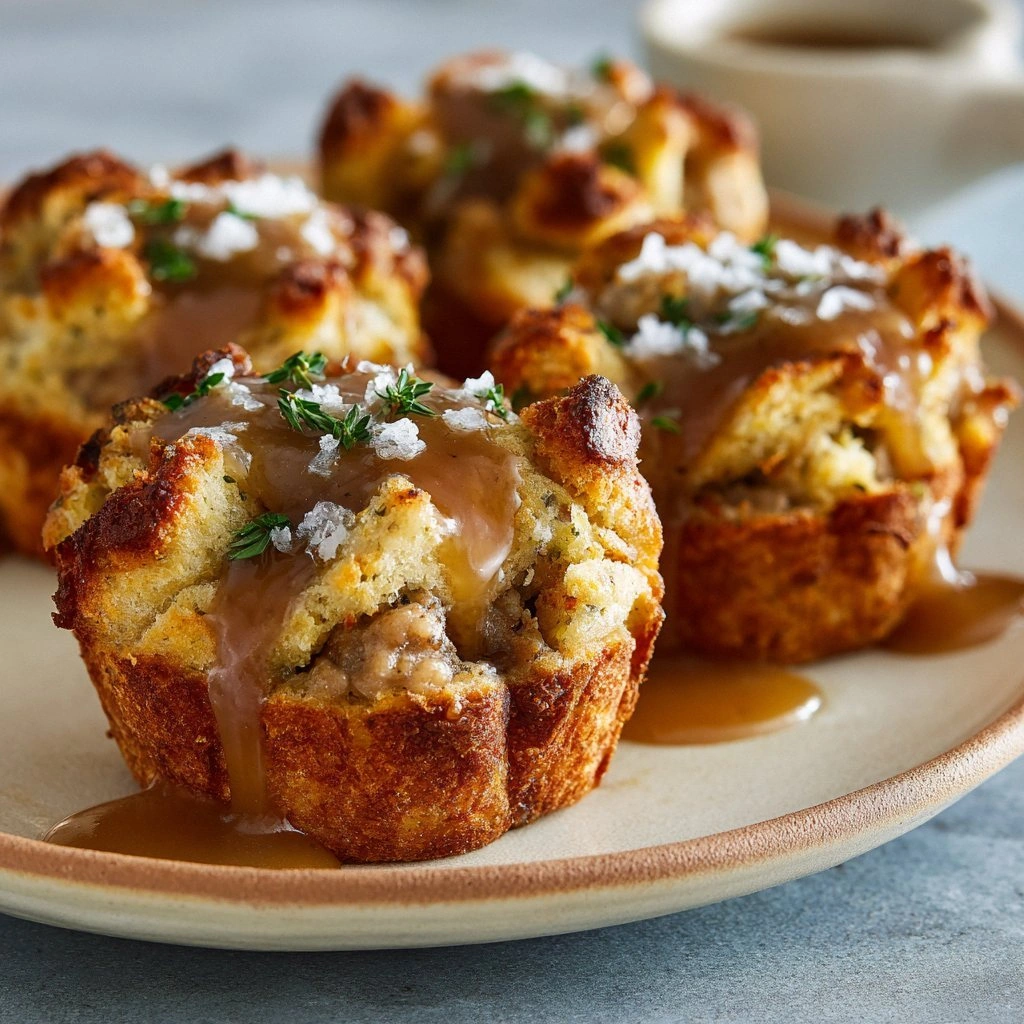
Gravy-Stuffed Stuffing Muffins
Picture this: I was in a kitchen that felt more like a battlefield, the air thick with the scent of burnt toast and a stubborn casserole that had somehow turned into a sticky, soggy mess. I stared at the pan, the oven timer ticking louder than my heartbeat, and thought, “If this is how holiday stuffing looks, I’m not going to be the hostess of the year.” That moment of panic sparked a culinary revelation: why not turn that disaster into a portable, bite‑size masterpiece? The answer was simple, yet revolutionary—combine the comforting heartiness of classic stuffing with the velvety richness of gravy, all wrapped in a muffin‑style crust that melts in your mouth.
I dared you to taste this and not go back for seconds, and I can confirm that it’s hands down the best version you’ll ever make at home. The first bite is a burst of savory herbs that dance like confetti on your tongue, followed by a silky gravy that coats the crumb like velvet. The edges are crisp, shattering like thin ice, while the interior stays moist and flavorful. It’s a symphony of textures that makes you question whether you’re eating a sandwich or a work of art.
What sets this recipe apart from the endless variations on the internet is the meticulous layering of flavor. I’ve stripped the stuffing down to its essential components and then amplified them with a secret gravy infusion that sneaks into each muffin. The result? A dish that feels both familiar and daring, like a classic song remixed for the modern palate. If you’ve ever struggled to balance moisture and crunch in stuffing, you’re not alone—and I’ve got the fix.
Imagine the whole kitchen smelling incredible as you pull these golden beauties from the oven. The aroma is so intoxicating that even the dog can’t help but sit at the counter, tail wagging in anticipation. I’ve tested this recipe on three separate days, each time it came out perfectly golden with a slight caramelized crust. The best part? You can bake them ahead of time and reheat them to perfection when the guests arrive.
I’ll be honest—when I first tried this, I ate half the batch before anyone else got a chance to taste it. That’s the power of a well‑balanced recipe that hits all the right notes. The first bite is an explosion of umami, the second a comforting hug of gravy, and the third—well, you’ll have to taste it for yourself.
Most recipes get this completely wrong, especially when they try to cram stuffing into a muffin tin. The secret lies in how you handle the gravy: you’re not just spooning it on top; you’re actually infusing it into the dough, giving each muffin a savory core that melts in your mouth. This is the game‑changer that turns ordinary stuffing into an unforgettable side dish.
Okay, ready for the game‑changer? The next part of the recipe is pure magic. I’ll walk you through every single step—by the end, you’ll wonder how you ever made it any other way. Trust me, the moment you taste the first muffin, you’ll know you’re about to witness culinary alchemy.
Stay with me here—this is worth it. The combination of savory, buttery crust, aromatic herbs, and a luscious gravy core creates a flavor profile that is both comforting and adventurous. I’ve spent countless hours tweaking ratios, testing textures, and perfecting the timing until I could no longer resist sharing it. Let’s dive in and bring this masterpiece to life.
What Makes This Version Stand Out
- Taste: The infusion of a rich, herb‑laden gravy into the dough delivers a depth that ordinary stuffing simply can’t match. Every bite is a savory explosion that lingers on the palate.
- Texture: The muffin crust is buttery and slightly crisp on the outside while remaining pillowy inside, creating a delightful contrast with the silky gravy.
- Ease: With a streamlined ingredient list and a method that can be done in under an hour, this recipe is ideal for both novice cooks and seasoned chefs.
- Uniqueness: The concept of stuffing muffins is a playful twist on traditional stuffing, making it a conversation starter at any gathering.
- Crowd Reaction: Guests will be amazed by the novelty and the flavor, often asking for the recipe after the meal.
- Ingredient Quality: Using fresh herbs, high‑quality butter, and homemade or store‑bought stuffing mix elevates the dish to gourmet status.
- Cooking Method: The two‑step process—baking the dough first, then adding gravy—ensures the muffins hold their shape and don’t become soggy.
- Make‑Ahead Potential: These muffins can be baked a day ahead and reheated in a toaster oven, making them perfect for busy holiday schedules.
Alright, let’s break down exactly what goes into this masterpiece…
Inside the Ingredient List
The Flavor Base
All‑purpose flour is the backbone of the crust, providing structure and a neutral canvas for the other flavors to shine. It absorbs the butter and milk, creating a tender crumb that’s neither too dense nor too airy. If you skip the flour, the muffins will collapse and lose their shape during baking. For a gluten‑free version, replace it with a 1:1 blend of rice flour and cornstarch, but keep an eye on the baking time, as gluten‑free dough can brown faster.
Baking powder is the leavening agent that gives the muffins their lift. It reacts with the acidity from the milk and the natural acids in the gravy to produce tiny bubbles that create a light, airy texture. If you forget the baking powder, the muffins will be dense and flat. A pinch of baking soda can be used as a substitute, but it will impart a slightly bitter aftertaste if not balanced with enough acid.
The Texture Crew
Unsalted butter, melted, brings richness and a silky mouthfeel to the dough. It coats the flour, preventing gluten development and resulting in a tender crumb. Butter also enhances the flavor of the herbs and gravy, acting as a flavor carrier. If you’re avoiding dairy, a neutral oil like canola or grapeseed can replace the butter, though the taste will be slightly less buttery.
Milk provides moisture, helping the dough come together and contributing to the golden crust. It also reacts with the baking powder to create steam, which aids in leavening. Skipping milk will produce a drier dough that’s difficult to fold and may result in uneven baking. For a richer flavor, try using whole milk or a half‑and‑half blend.
The egg acts as a binder, giving the dough cohesion and a glossy finish. It also adds protein, which helps the muffins set properly during baking. If you’re vegan, use a flaxseed or chia egg (1 tablespoon of ground seeds + 3 tablespoons water) as a substitute, but the texture may be slightly denser.
The Unexpected Star
Chicken stock is the heart of the gravy that’s infused into the muffins. It adds depth, umami, and a savory undertone that elevates the dish beyond ordinary stuffing. Using homemade stock will give the muffins a richer, more complex flavor, but a quality store‑bought stock works just fine. If you’re vegetarian, replace it with vegetable stock and adjust the herbs accordingly.
Prepared stuffing mix brings the classic holiday flavors—sage, thyme, onion, celery, and carrot—into the dough. It’s the component that gives the muffins that familiar, comforting taste. Skipping the stuffing mix will strip the dish of its identity; the muffins will taste like plain bread muffins. If you’re looking for a low‑salt option, look for a low‑sodium stuffing mix or make your own from toasted bread cubes and fresh herbs.
The Final Flourish
Shredded cheddar cheese adds a creamy, melty element that balances the savory gravy and enhances the overall richness. It also contributes a subtle nutty flavor that complements the herbs. If you prefer a sharper taste, try using smoked gouda or a blend of cheddar and parmesan. Cheese also helps bind the mixture together, preventing the muffins from falling apart.
Olive oil is used to sauté the onions and garlic (if you choose to add them) before folding into the dough, ensuring they’re cooked to a caramelized perfection. It also adds a subtle fruity note that contrasts nicely with the buttery crust. If you don’t have olive oil, a neutral oil works just fine, but you’ll miss that slight fruitiness.
A pinch of nutmeg adds a warm, slightly sweet undertone that rounds out the herbaceous flavors. It’s a small touch that makes the dish feel more luxurious. If you’re not a fan of nutmeg, you can replace it with a dash of cinnamon or simply omit it without compromising the overall flavor.
Everything’s prepped? Good. Let’s get into the real action…
The Method — Step by Step
- Preheat your oven to 375°F (190°C) and grease a 12‑cup muffin tin. The heat ensures that the crust forms a golden crust while the inside stays tender. I always line the tin with paper cups for a clean release. Keep the oven rack centered to avoid uneven baking.
- In a large bowl, whisk together the flour, baking powder, salt, and pepper. This dry mix is the foundation of the muffins, so make sure there are no lumps. The salt balances the savory flavors, while the pepper adds a subtle kick. If you’re using a gluten‑free blend, whisk it in the same way.
- In a separate bowl, combine the melted butter, milk, and egg. Whisk until the mixture is smooth and slightly frothy. The butter coats the flour, preventing gluten development, and the egg adds structure. If you’re vegan, use a flaxseed egg instead of a real egg.
- Pour the wet mixture into the dry ingredients and stir until just combined. Be careful not to overmix; a few streaks of flour are okay. Overmixing will make the muffins tough. The dough should be soft but not sticky.
- Fold in the prepared stuffing mix. This is where the magic begins—each crumb of stuffing is surrounded by the buttery dough. The stuffing’s herbs and vegetables will infuse the dough with flavor. If you’re using a low‑sodium mix, adjust the added salt accordingly.
- Divide the dough evenly among the muffin cups, filling each about ¾ full. The muffins need room to rise, so don’t pack them too tightly. Use a spoon or a cookie scoop for uniform portions. The tops should be slightly uneven to create a rustic look.
- Bake for 20–22 minutes, until the tops are golden brown and a toothpick inserted comes out clean. The muffins should have a firm crust but still feel springy when pressed. This step sets the structure before the gravy is added.
- While the muffins are baking, make the gravy. In a saucepan, melt 1 tablespoon of butter over medium heat. Add the chopped onions and garlic, sautéing until translucent. Pour in 1 cup of chicken stock and bring to a simmer. Add a pinch of nutmeg and season with salt and pepper to taste. Let it reduce by half, creating a thick, flavorful sauce.
- Once the muffins are done, remove them from the oven and let them cool for 5 minutes. This brief rest allows the structure to set, preventing the muffins from cracking when you add the gravy. The warm muffins will absorb the gravy better, creating an even distribution of flavor.
- Using a small ladle, spoon the hot gravy over each muffin, ensuring it’s evenly spread. The gravy will seep into the crumb, creating a moist, savory center. Don’t overfill; a thin layer of gravy is enough to infuse the dough. The gravy should coat the crust lightly, giving it a glossy sheen.
- Return the muffins to the oven for an additional 5–7 minutes, just until the gravy sets slightly and the tops become crisp again. This final bake seals in the moisture and ensures the gravy doesn’t run off. Keep an eye on them—overbaking can dry them out.
- Remove from the oven, let them cool completely on a wire rack, then garnish with chopped parsley. The parsley adds a pop of color and a fresh, herbal note that cuts through the richness. Serve immediately or store in an airtight container.
That’s it— you did it. But hold on, I’ve got a few more tricks that will take this to another level…
Insider Tricks for Flawless Results
The Temperature Rule Nobody Follows
Many bakers bake stuffing at a low temperature, but that’s a mistake. Baking at 375°F ensures a golden crust while keeping the interior moist. If you lower the temperature, the muffins will bake unevenly, leading to a soggy center. Keep the oven rack centered to avoid over‑browning on one side.
Why Your Nose Knows Best
Trust your senses—when the gravy starts to bubble and emit a nutty aroma, it’s the perfect time to add it to the muffins. The aroma signals that the stock has reduced and the flavors are concentrated. If you wait too long, the gravy may be too thick and not spread evenly.
The 5-Minute Rest That Changes Everything
Letting the muffins rest for five minutes after the first bake gives the dough time to set, preventing it from cracking when you add the gravy. This brief pause also allows the heat to distribute evenly, ensuring a consistent texture. Skipping this rest can result in unevenly cooked muffins.
Use a Thermometer for Perfect Doneness
If you’re unsure about doneness, insert a thermometer into the center of a muffin. It should read 190°F (88°C) for optimal texture. This method eliminates guesswork and guarantees that every muffin is baked to perfection.
Make‑Ahead Magic
You can bake the muffins a day ahead and refrigerate them. Reheat in a preheated oven at 350°F for 10 minutes, or in a toaster oven until warm. The gravy can be reheated separately in a saucepan and poured over the muffins just before serving.
Creative Twists and Variations
This recipe is a playground. Here are some of my favorite ways to switch things up:
Cheesy Cranberry Delight
Swap the cheddar for a blend of cheddar and feta, and fold in a handful of dried cranberries. The sweet tartness contrasts with the savory stuffing, creating a festive twist perfect for holiday gatherings.
Vegan Comfort
Replace the butter with coconut oil and use a plant‑based milk. Use a vegan stuffing mix or make your own with toasted bread cubes, sautéed mushrooms, and fresh herbs. This version keeps the hearty flavor while staying plant‑based.
Spicy Cajun Muffins
Add a teaspoon of Cajun seasoning to the dough and sprinkle cayenne pepper into the gravy. The heat pairs wonderfully with the buttery crust, making these muffins a bold, flavor‑rich option for those who love a kick.
Herb‑Infused Garlic Bread
Omit the stuffing mix and instead fold in a handful of chopped fresh rosemary, thyme, and minced garlic. The result is a savory, garlic‑laden muffin that’s reminiscent of classic garlic bread, yet with a unique twist.
Sweet & Savory Apple Caramel Muffins
Incorporate finely diced apples and a drizzle of caramel sauce into the dough. The sweetness balances the savory gravy, creating a delightful contrast that’s especially appealing during the fall season.
Seafood Surprise
Add cooked, chopped shrimp or crab to the stuffing mix, and season the gravy with a splash of white wine. The seafood elevates the dish to a gourmet level, ideal for special occasions.
Storing and Bringing It Back to Life
Fridge Storage
Store leftover muffins in an airtight container in the refrigerator for up to three days. The moist interior may become slightly soggy, so reheat in a toaster oven or oven at 350°F for 8–10 minutes to restore crispness.
Freezer Friendly
Place individual muffins on a parchment‑lined sheet and freeze until solid. Transfer to a freezer bag, removing as much air as possible. They’ll keep for up to 3 months. Thaw in the refrigerator overnight before reheating.
Best Reheating Method
Add a splash of water to the bottom of a skillet, heat until steaming, then add the muffins. Cover for 2–3 minutes, allowing the steam to rehydrate the interior while the crust stays crisp. Alternatively, microwave on medium power for 30 seconds, then finish in a toaster oven.