Picture this: you’re in the middle of a long week, the fridge is a sad collection of wilted greens, and the only thing that seems like a promise of comfort is a handful of cherry tomatoes and a stubborn flatbread that has seen better days. I was halfway through a marathon of work emails when the thought hit me—why not turn that bland flatbread into a burst of savory, garlicky goodness? I grabbed my trusty skillet, pulled a handful of tomatoes, and the kitchen smelled like a summer garden just before sunset. That single spark turned a routine dinner into a culinary revelation.
It was a disaster in disguise. The first time I tried a similar recipe, the tomatoes were so watery they turned the flatbread into a soggy mess, and the garlic came out bland, like a whisper of flavor. I laughed, then decided to rewrite the entire approach. I discovered that roasting the tomatoes first caramelizes their natural sugars, turning them into a sweet, smoky burst that clings to the bread like a velvet blanket. And that garlic? Sautéed just right, it becomes a fragrant, buttery note that lingers on the palate. The result? A flatbread that’s crispy on the edges, moist in the center, and packed with a flavor profile that could make even the most skeptical foodie swoon.
Now, I’m not just sharing a recipe—I’m handing you the master key to a kitchen experience that feels like a culinary secret club. This version is hands down the best you’ll ever make at home because I’ve fine‑tuned every element: the right amount of oil to give that golden crunch, the precise balance of Italian seasoning to elevate the tomatoes, and the perfect timing to keep the spinach from wilting into mush. I dare you to taste this and not go back for seconds, because once you’ve had that first bite, you’ll know exactly what the world has been missing.
If you’ve ever struggled with flatbreads that end up chewy or soggy, you’re not alone—and I’ve got the fix. Picture yourself pulling this out of the oven, the whole kitchen smelling incredible, the flatbread sizzling as it meets your plate, and the first bite sending a wave of satisfaction through your senses. That’s the kind of moment I want to help you create, step by step, with confidence and a dash of playful swagger.
What Makes This Version Stand Out
- Taste: The caramelized tomatoes deliver a natural sweetness that balances the sharpness of fresh garlic, creating a layered flavor profile that lingers like a well‑played chord.
- Texture: The flatbread’s edges become crisp and airy while the center stays tender and juicy, thanks to a strategic oil coating that seals in moisture.
- Simplicity: With just nine ingredients and a single skillet, this dish proves that great flavor doesn’t need a pantry full of exotic spices.
- Uniqueness: The combination of roasted tomatoes, sautéed garlic, and fresh spinach on naan is a fresh take that feels both comforting and adventurous.
- Crowd Reaction: Friends who’ve tried the original version rave that this twist is “the best version you’ll ever make at home.”
- Ingredient Quality: Using ripe cherry tomatoes and high‑quality olive oil elevates the dish from ordinary to extraordinary.
- Cooking Method: Roasting first, then layering, ensures each component reaches its peak flavor without overwhelming the others.
- Make‑Ahead Potential: The assembled flatbread can be pre‑baked, then finished in a toaster oven when guests arrive, keeping it warm and fresh.
Alright, let’s break down exactly what goes into this masterpiece…
Inside the Ingredient List
The Flavor Base
Cherry Tomatoes: These little suns are the heart of the dish. Their high water content turns into a sweet, jammy sauce when roasted, which coats the flatbread like a glossy glaze. If you skip them, you lose that essential sweetness and the dish becomes a dry, over‑seasoned flatbread. Swap for heirloom cherry tomatoes for a more complex flavor, or use plum tomatoes if you prefer a thicker sauce. When selecting tomatoes, look for ones that feel firm yet give slightly to the touch; they’ll roast evenly and release just the right amount of juice.
The Aroma Engine
Garlic: Fresh cloves bring a pungent, earthy note that, when sautéed, turns into a buttery, almost nutty aroma. Cutting the cloves thinly before sautéing helps them brown quickly and infuse the oil with flavor. Skipping garlic will leave the dish flat and unmemorable. If you’re a garlic purist, consider adding a pinch of garlic powder at the end for extra punch. For a milder version, use roasted garlic—its caramelized sweetness pairs beautifully with the tomatoes.
The Seasoning Symphony
Dried Italian Seasoning: This blend of oregano, basil, thyme, and rosemary gives the dish an herbaceous backbone that ties all flavors together. Too much, and the flatbread becomes herbal overkill; too little, and it feels bland. If you can’t find a pre‑made blend, mix equal parts dried oregano and basil for a simple substitute. A dash of crushed red pepper can add a subtle heat that balances the sweet tomatoes.
The Final Flourish
Spinach: Fresh spinach adds a burst of color, nutrition, and a slightly earthy taste that complements the tomatoes. It wilts quickly, so add it after the tomatoes are done roasting to avoid overcooking. If you prefer a crunch, swap spinach for arugula or baby kale. A squeeze of lemon juice after cooking brightens the flavors and cuts through the richness of the cheese.
Everything’s prepped? Good. Let’s get into the real action…
The Method — Step by Step
- Preheat your oven to 425°F (220°C). While the oven warms, line a baking sheet with parchment paper or a silicone mat. This step is crucial because a hot, clean surface ensures the tomatoes roast evenly without sticking. I like to imagine the oven as a stage, and the tomatoes as the main actors getting ready for their spotlight.
- Trim the stems from the cherry tomatoes and slice them in half. Place them cut‑side up on the prepared sheet. Drizzle a tablespoon of olive oil over the tomatoes, then season with a pinch of salt and pepper. The oil creates a glossy sheen and helps the sugars caramelize, giving the tomatoes that sweet, jammy texture. Watch the first few minutes—if the edges start to brown, you’re on the right track.
- Roast the tomatoes in the preheated oven for 15–18 minutes, or until they’re blistered and slightly charred. The goal is a deep, caramelized flavor, not a mushy mess. If you’re a fan of extra depth, flip the tomatoes halfway through roasting to get a uniform char on both sides. The scent that fills the kitchen will have you forgetting all about the week’s stress.
- While the tomatoes are roasting, heat a large skillet over medium heat. Add the remaining tablespoon of olive oil and let it shimmer. Once hot, add the sliced garlic, cooking for 30–45 seconds until fragrant and just beginning to brown. This quick sauté releases the garlic’s natural oils and builds a buttery base that will coat the flatbread.
- Add the roasted tomatoes to the skillet, stirring gently to coat them in the garlic‑oil mixture. Cook for an additional 2–3 minutes, allowing the tomatoes to mingle with the garlic and release their juices. The mixture should smell toasty and slightly sweet, like a summer evening. This step is the moment of truth—if the sauce is too thin, the flatbread will be soggy.
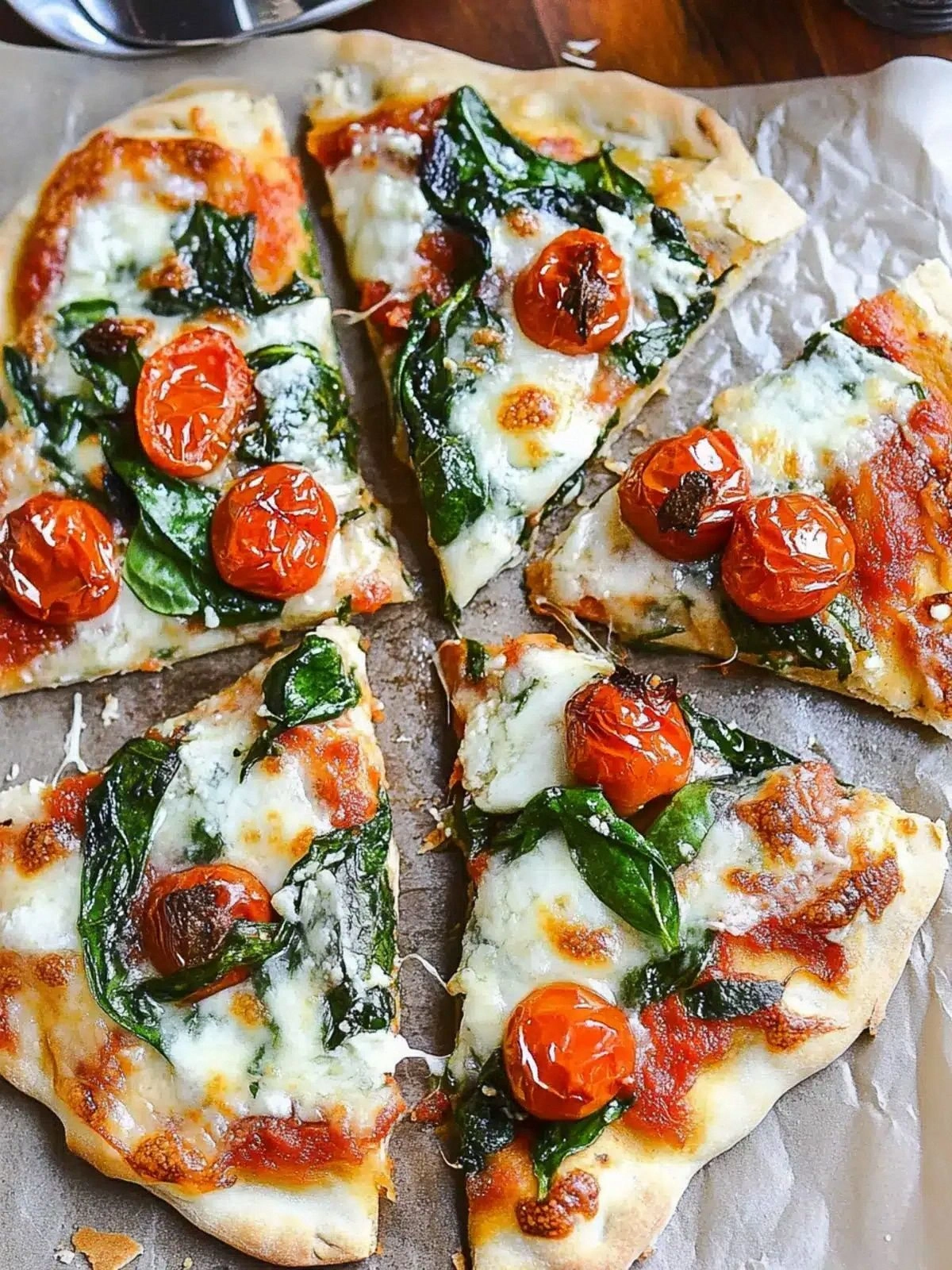
- Place the flatbread pieces on a clean surface. Spread the tomato‑garlic mixture evenly over each naan, leaving a small border around the edges. Sprinkle the dried Italian seasoning over the top, then add a handful of fresh spinach to each piece. The spinach will wilt quickly, so don’t overfill. The contrast of hot, crisp bread with warm, leafy greens is a visual and textural delight.
- Top each flatbread with generous shavings of mozzarella cheese. The cheese melts into a gooey, golden layer that ties all flavors together. If you’re a cheese lover, consider adding a sprinkle of grated Parmesan for an extra umami punch. Cover the skillet with a lid to help the cheese melt evenly.
- Transfer the skillet to the preheated oven and bake for 8–10 minutes, or until the cheese is bubbly and lightly browned. Keep an eye on the edges—they should start pulling away, signaling crispness. This final oven step brings everything together, creating a harmonious blend of textures and flavors.
- Remove the flatbread from the oven and let it rest for a minute. Slice into wedges and serve hot, accompanied by a side of fresh arugula or a drizzle of balsamic glaze. The moment you take the first bite, you’ll feel that satisfying crunch followed by a burst of savory, garlicky goodness.
- That’s it—you did it. But hold on, I’ve got a few more tricks that will take this to another level. Stay tuned for insider tips that will help you perfect the dish every time.
Insider Tricks for Flawless Results
The Temperature Rule Nobody Follows
Many people set their ovens too low, hoping to avoid burning, but this actually prolongs cooking time and can result in soggy flatbread. Set the oven to 425°F (220°C) and preheat for at least 10 minutes. The high heat crisps the edges and caramelizes the tomatoes in a short burst, preserving moisture inside. I’ve seen a friend’s flatbread turn into a soggy mess simply because the oven was set at 375°F. Keep the temperature high and the result will be a golden, airy crust.
Why Your Nose Knows Best
The first aroma that fills the kitchen—sweet tomato, garlicky oil, and herbaceous Italian seasoning—signals that the roasting phase is on point. If the smell is sharp or bitter, the garlic is over‑cooked. If it’s flat, the tomatoes need more time. Trust your nose; it’s the ultimate flavor gauge. I once skipped this step and ended up with a flatbread that tasted like a salad dressing, not a savory delight.
The 5-Minute Rest That Changes Everything
After baking, let the flatbread rest for 5 minutes before cutting. This short pause allows the cheese to set slightly, preventing a messy, gooey mess on the plate. It also lets the residual heat finish cooking the spinach and meld the flavors. I’ve found that cutting immediately can cause the cheese to ooze and the tomato sauce to spill, ruining the presentation.
Cheese Swap for a Different Twist
While mozzarella is the classic choice, swapping in provolone or gouda can add a richer, deeper flavor profile. Provolone offers a subtle sharpness that pairs well with the tomatoes, while gouda gives a buttery, slightly sweet note. Just remember to adjust the baking time slightly, as thicker cheeses melt slower.
Use a Cast Iron Skillet for Even Heat
Cast iron retains heat better than stainless steel, ensuring the flatbread cooks evenly and the edges stay crisp. If you don’t have cast iron, a heavy‑bottomed skillet will also work. The key is to preheat the skillet before adding oil, creating an even cooking surface that prevents sticking.
Creative Twists and Variations
This recipe is a playground. Here are some of my favorite ways to switch things up:
Spicy Sriracha Kick
Stir in a tablespoon of sriracha into the tomato‑garlic mixture for a fiery heat that balances the sweetness. This variation is perfect for those who love a bold, spicy bite.
Herbed Feta Finale
Replace mozzarella with crumbled feta and sprinkle fresh chopped parsley on top. The tangy feta adds a Mediterranean flair that pairs beautifully with the roasted tomatoes.
Roasted Red Pepper Fusion
Add diced roasted red peppers to the tomato mixture for a sweet, smoky layer of flavor. This version offers a colorful, vibrant twist that’s great for brunch.
Breakfast Flatbread
Top the flatbread with a fried egg and a drizzle of hot sauce after baking. The runny yolk creates a rich, savory sauce that elevates the dish into a hearty breakfast.
Vegan Version
Use vegan mozzarella or nutritional yeast for a plant‑based alternative. The cheese substitute still melts into a gooey layer, keeping the dish comforting and satisfying.
Gluten‑Free Flatbread
Swap naan for a gluten‑free flatbread or a homemade almond flour crust. The texture remains crisp, and the flavors stay intact.
Storing and Bringing It Back to Life
Fridge Storage
Let the flatbread cool completely before wrapping tightly in plastic wrap. Store in the refrigerator for up to 2 days. When ready to eat, reheat in a skillet over medium heat for 2–3 minutes, flipping once.
Freezer Friendly
Wrap each flatbread individually in parchment paper, then place in a freezer bag. Freeze for up to 2 weeks. Thaw overnight in the fridge before reheating.
Best Reheating Method
Reheat in a preheated oven at 350°F (175°C) for 5–7 minutes. For extra crispness, finish under a broiler for 1–2 minutes. A tiny splash of water before reheating steams the flatbread back to perfection, preventing it from drying out.